




Which Dances Should I Learn First?
As a new dancer, you might not know which dances to start with. These brief descriptions with video and song clips will give you an idea of what each dance is like, so you can decide which ones might suit you best.
East Coast Swing is essentially the “Jitterbug” that became so popular in the 40’s and 50’s…and it is still very much alive today. A lively dance, it has a less serious, very ‘happy’ feel to it. Swing is a ‘spot’ dance, so it can be danced in rather tight quarters. Plenty of twists and turns to be had-as well as the occasional being wrapped up into your partner’s arms! E.C.Swing can be danced in three different timings - to accommodate very fast to very slow tempos. Appropriate music would be ‘Big Band’ style songs.
- Traditional
- In the Mood
- Glenn Miller Orchestra
- Modern
- Are you Hep to the Jive
- Big Time Operator
- Modern, slow
- Tryin’ to Forget You
- Candye Kane
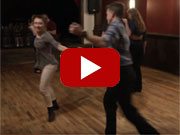
East Coast Swing - Single Time
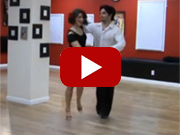
East Coast Swing - Triple Time
Lindy-Hop is a traditional version of swing, and an elaborate dance with changes in timing throughout. It is danced to Big Band music, at fast, medium or slow tempos. It is a ‘spot’ dance, so it requires little space to be danced comfortably. Lindy is known for it’s aerials (lifting or “throwing” one’s partner) as well as abundant spins and swivels. (A girl can “work her skirt” by swiveling her hips from side to side.) Modern Lindy-Hoppers are known for incorporating other dances of the era such as Charleston, Balboa, Boogie-woogie, and Shag.
- Modern, slow tempo
- The Way we Ought to be
- Indigo Swing
- Modern, medium tempo
- Give Your Little Baby Lots of Lovin
- Anson Weeks
- Modern, fast tempo
- That’s Where my Money Goes
- Indigo Swing
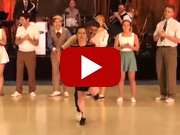
Lindy Competitive-Performance
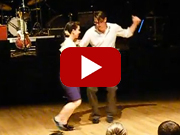
Lindy Competitive-Performance
West Coast Swing is a descendant of the Lindy-Hop, and the two dances are structurally similar. W.C. Swing, however, has a more sophisticated feel, and is traditionally danced to Rhythm and Blues. (Cool & sexy). Modern dancers, however, dance to many styles of music including Hip-hop, and Funk. W.C. Swing is a ‘slot’ dance, as each couple takes up a ‘slot’ of space on the floor. This enables dancers to take advantage of even a very small space for dancing. The dance is characterized by sharp stops-or freezes-at appropriate breaks in the music, as well as invitational patterns, which give the lady an unusual amount of creative freedom.
- Traditional, slow tempo
- Wade in the Water
- Eva Cassidy
- Traditional, fast tempo
- Whole Lotta Leave Me Alones
- Trudy Lynn
- Modern, slow tempo
- Give Me One Reason
- Tracey Chapman
- Modern, fast tempo
- All For You
- Janet Jackson
West Coast Swing
West Coast Swing
West Coast Swing
West Coast Swing
Balboa iis a very fast swing-era dance with a subtle 'bounce' and shuffling footwork. The basic steps take up very little space and are danced with a full body connection. It developed this way because of the overcrowded dance floors of the time, so it's great for dancing in small spaces. It was developed in the 1920's as an alternative to the more exuberant swing dances. Bal Swing takes the closed, subtle patterns of Balboa and opens them up to create more elaborate moves, and spins.
Balboa - BalSwing
Balboa - PureBal
Hustle evolved out of the disco music of the 1970's. It is similar to Swing in that it is a spot dance mainly made up single or double handed spins or wrap-style moves. It is a relatively smooth dance, with syncopated timing, and it is generally very fast. Throughout the world, similar dances were created for disco music during this era, having similar style and structure, but slightly different timing.
- Traditional: Stayin Alive
- The Bee Gees
- Traditional: Check Out
- Francesco Demegmi
- Modern: Blurred Lines
- Robin Thicke
- Modern: Summer Heat
- Solidisco
Basic social hustle
Hustle
Competitive hustle
Nightclub Two-Step (also called California two-step, Disco two-step, or Night-club Slow) was invented by Buddy Schwimmer around 1965. It is danced to medium to slow pop music, and has a more relaxed feel and frame than most ballroom dances. A spot dance with a smooth feel, it has stationary as well as traveling moves, and is appropriate for most dance floors, whatever the size.
- Modern
- Lady in Red
- Chris De Burgh
- Modern
- By Your Side
- Sade
Nightclub Two-Step
NC 2-Step Choreography-Performance
Foxy is a slow to medium tempo dance that is a hybrid between Foxtrot and Waltz. Many modern slow songs do not fit neatly into the category of a specific style of dance, so by combining foxtrot patterns with waltz timing and a little bit of tweaking, we can produce a beautiful smooth traveling dance for this type of music. Foxy can be danced with a four count basic or a six count basic depending on the speed and feel of the music.
The four count basic used for slower songs, and the six count basic is used for songs with a bit more groove and a vertical pulse. Foxy is often danced for wedding dances as an alternative to nightclub two-step.
- 4 count
- What a Wonderful World
- Louis Armstrong
- 4 count
- At Last
- Etta James
- 4 count
- Thank You for Loving Me
- Bon Jovi
- 6 count
- By Your Side
- Sade
- 6 count
- My Best Friend
- Tim McGraw
- 6 count
- Thinking Out Loud
- Ed Shearen
Salsa is by far the most popular of the Latin dances in the United States today. It is fast, sexy, and relentless in its combinations of exciting spins, twists, and turns. It incorporates the constant rhythmic hip motion of the other Latin dances to provide a dance experience that is “action packed” (to say the least). It is a ‘spot ‘dance, so it requires only a small bit of dance floor space to be comfortably danced. (Which is good, because the Salsa clubs are generally quite full!)
- Modern
- Amar Sin Condicion
- Maelo
- Modern
- Juliana
- Dark Latin Groove
Salsa
Salsa
Cha-cha is exciting and invigorating! Latin in nature, the Cha-cha is characterized by fast Latin rhythms with a syncopated beat. It is a ‘spot’ dance, so it does not travel and can easily be danced on a small dance floor. The hips are likely to get a good workout in this dance, as it incorporates plenty of Latin hip motion. In addition to traditional Latin cha-cha music, many popular club songs and faster ‘top 40’ type songs are appropriate for dancing cha-cha.
- Traditional
- Volver a Verte
- Oscar D'Leon
- Modern
- Lady Marmalade
- Christina Aguilera,
Lil' Kim, Mya and Pink
- Modern
- Echa Pa`Lante
- Thalia
Cha-Cha Beginner
Cha-Cha International
Merengue is the national dance of the Dominican Republic It is a medium tempo Latin dance characterized by abundant hip motion. Similar to Salsa in it's many under arm turns and "wrap-style" patterns, Merengue can be a delightful, sexy whirlwind. The foot patterns are very simple – perhaps the simplest of all the partner dances. But what it lacks in challenging footwork it makes up for in the elaborate body isolations of Latin motion. Merengue is a driving, sometimes frenetic constant beat of Latin party music.
- Me Niña Bonita
- Merengue Latin Band
- Nadie se Muere
- La Makina
- Commo to Trueno
- llegales, Pavel de Jesus, Socrates de Jesus
Merengue

Merengue
Bachata is a relatively young dance. It evolved in the Dominican Republic in the early part of the 20 the century. It can be danced slow and sultry or quick with a pulsing rhythm. Either way, it is a sexy dance with abundant hip gyration. Bachata music keeps a constant pulsing rhythm like most of the faster Latin dances. The Music feels like a combination of Bolero and Merengue.
- Culpa al Corizan
- Prince Royce
- Rechazame
- Prince Royce
- Sin Tus Besos
- Romy, DJ Conds
Bachata
Bachata
Mambo is a modern, lively Latin American dance that became popular in the US in the 1950s. It is similar to Salsa, except that the patterns are more structured and have more of a ballroom feel as opposed to the "street" style of modern salsa dancing. The music as well is similar to Salsa, but more staccato and with sharper and clearer rhythms. Like the other Latin dances, Mambo can be danced with traditional Latin styling. This includes a lot of movement in the knees, hips and rib cage.
- Cerezo Rosa
- Perez Prado
- El Cayuco
- Tito Puente
- Mambo #5
- Perez Prado
Basic Mambo
Mambo "Shines" Performance
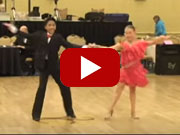
Ballroom Mambo Performance
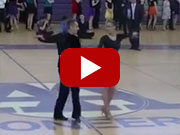
Ballroom Mambo Beginner's Level Competition
Samba is a festive, happy, and energetic dance born in Brazil. Traditional Samba dancing and the Samba partner dance that we do in the US are very different, as traditional Samba is danced solo. Whether dancing solo or with a partner, the feel of the music and the rhythm are the same, but the footwork and patterns we do in partner dancing are unique to ballroom style Samba. The dance is characterized by a rhythmic, pulsing bounce – and it can remain in place as a " spot" dance, or travel around the floor.
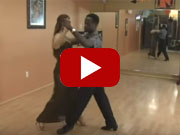
Basic Social Samba
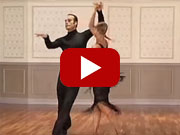
International Samba
International Style Samba Competition
Rumba is the mother of the Latin dances. Its slow, sensual movements make it perfect for an intimate ‘slow dance’ (just you and your sweetie) whereas it’s elaborate patterns make it just as appropriate for a performance dance (just you, your sweetie, and the cheering audience). Rumba has a relaxed feel for the dancer, and is characterized by plenty of Latin hip motion. It is compact enough to be danced on a rather small dance floor. In addition to traditional Latin music, many popular (top 40 type) ballads are appropriate for dancing Rumba.
- Traditional
- Amado Mio
- Pink Martini
- Modern
- You Make it Easy
- Air
Rumba
Rumba Wedding Dance
Foxtrot is like a Sunday afternoon stroll in the park… smooth and relaxed, with just a touch of liveliness in its steps. It is a traveling dance, so it is comfortably danced on a medium to large dance floor. Appropriate music is jazzy with a medium to quick tempo. For instance, if it’s by Frank Sinatra and you can snap your fingers to it….it’s probably Foxtrot.
- Traditional, medium tempo
- Too Marvelous for Words
- Frank Sinatra
- Traditional, slow tempo
- Our Love is Here to Stay
- E. Fitzgerald and L. Armstrong
Foxtrot
Competitive-Performance Foxtrot
Waltz is smooth and romantic, and as a traveling dance, requires a medium to large floor to be danced comfortably. Rise and fall throughout the dance give it a very fluid, almost ‘floating’ look. Waltz music can be identified as it is in ¾ time, as opposed to the 4/4 timing of the other dances.
- Traditional
- A Tender Heart
- Joe Romano
- Modern
- Come Away with Me
- Nora Jones
Waltz
Viennese Waltz is a fast and invigorating style of Waltz. It travels the floor at a feverish pace, and requires a large floor to be danced comfortably.
- Modern
- You Ever Really Loved A Woman?
- Bryan Adams
Viennese Waltz
Viennese Waltz
American Tango is passionate and dramatic! Its staccato movements and bold, forceful steps make it exciting for both dancer and spectator. As a traveling dance, it requires a medium to large floor to be danced to it’s fullest.
- Traditional
- Tango Jack
- Joe Romano
- Traditional
- El Toreador
Argentine Tango is the original Tango. It is a passionate, yet intimate dance characterized by a close embrace and steps that entwine the legs, as well as intricate and delicate foot movement. It is a dance that allows a lot of ‘playing’ with the feet. Although this style of Tango may travel quite a bit on the floor, it is also comfortably danced in small spaces.
- Traditional
- Recuerdo
- Orquesta Tipica
- Modern
- Jeanne y Paul
- Astor Piazzolla
Argentine Tango

Tango Performance
(be sure to watch past 2:17)
Bolero, a beautiful and fluid dance, is the slowest and most romantic of the five rhythm dances. It is a spot dance, so it can be danced comfortably in a small amount of space, but also includes enough styling and drama for a great dance performance. Bolero is generally dance to slow tempo Latin music, although many popular slow songs are also appropriate. This dance is quite different from the other Latin dances in that it not only requires cuban motion but also the rise and fall technique that we normally find in waltz.
The bolero is a close cousin of the Rumba, sharing the same timing and many similar patterns.
Bolero
Bolero
Return to top.
Questions?
Call us anytime!


Hang out with us.